
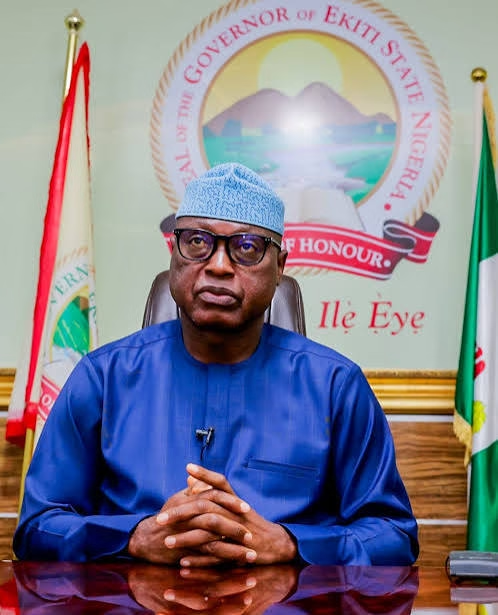
Ekiti State Governor Biodun Oyebanji has unveiled a 30-year vision aimed at positioning the state as a global hub for the knowledge economy, with technology, culture and tourism identified as key drivers of future growth.
Oyebanji presented the vision on Wednesday in Ado Ekiti while delivering the keynote address at the Ekiti at 30 Future Summit, organised as part of activities marking the 30th anniversary of the state’s creation.
The governor said Ekiti must move beyond relying on certificates and focus on innovation, enterprise and the ability to turn knowledge into economic value.
He said his administration would continue to support initiatives capable of preparing the state for 2056, while challenging young people to develop solutions to local problems using technology and acquired skills.
According to him, the future Ekiti he envisions will have a modern and profitable agricultural sector, with a complete value chain covering production, processing, packaging, logistics and export.
Oyebanji also identified technology and intellectual capital as major assets, saying Ekiti should produce software developers, digital creators, researchers, designers, engineers and technology entrepreneurs who can compete globally while contributing to their communities.
He further called for increased private-sector participation, noting that government could not be the sole employer of labour. He said the state’s responsibility was to create an environment where businesses could start, survive and grow.
Tourism, he added, should become another major source of economic opportunities, with Ekiti’s waterfalls, warm springs, historic sites, festivals, cuisine, music and artistic traditions developed to create jobs across different sectors.
The governor urged young people to take an active role in shaping the state’s future by acquiring relevant skills, embracing technology and turning ideas into practical solutions.
Speaking at the summit, lead speaker Dr Tunji Olowolafe stressed the importance of connecting education with skills, enterprise and innovation. He said Ekiti’s development would depend on its ability to transform knowledge acquired through education into practical solutions that create jobs and reduce poverty.
The Ewi of Ado Ekiti, Oba Rufus Adejugbe, and the Ajero of Ijero Ekiti, Oba Adebayo Adewole, also reflected on the struggles surrounding the creation of the state in 1996.
The traditional rulers commended the summit’s focus on the future and called for a comprehensive development plan that would sustain Ekiti’s growth while preserving its values, unity and identity.
The event also featured the presentation of prizes to winners of the Ekiti at 30 essay competition, themed “My Dream and Agenda for the Next 30 Years.”
Peace Ogunjemilua emerged as the first-prize winner, while Blessing Adelusi and Ayomide Lafiaji took second and third positions respectively. Fifteen other finalists also received consolation prizes.
Oyebanji said the 30th anniversary should serve not only as a time to celebrate the state’s achievements but also as an opportunity to determine the kind of Ekiti future generations would inherit.