
In many Yoruba families, there are words you grow up hearing long before you fully understand them.
An elder may call your name and then continue with a string of praise names. Everyone around you seems to know what the words mean, where they came from and sometimes even the person or story behind them. You may only understand some of it as a child, but as you grow older, those same words begin to make more sense.
That is the place of oríkì in Yoruba culture.
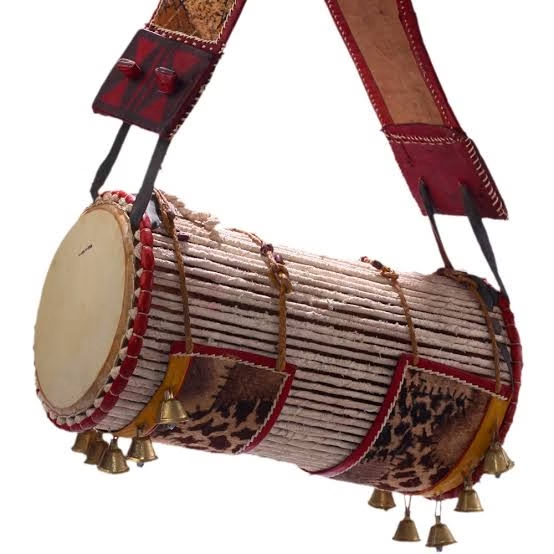
Often described as Yoruba praise poetry or praise appellation, oríkì can belong to an individual, a family, a lineage, a town, a traditional ruler or an òrìṣà. It can be a few words or a much longer performance, spoken or chanted and sometimes accompanied by music.
But oríkì is not simply about praising someone. It can tell you something about the people they come from.
Words That Carry Family History
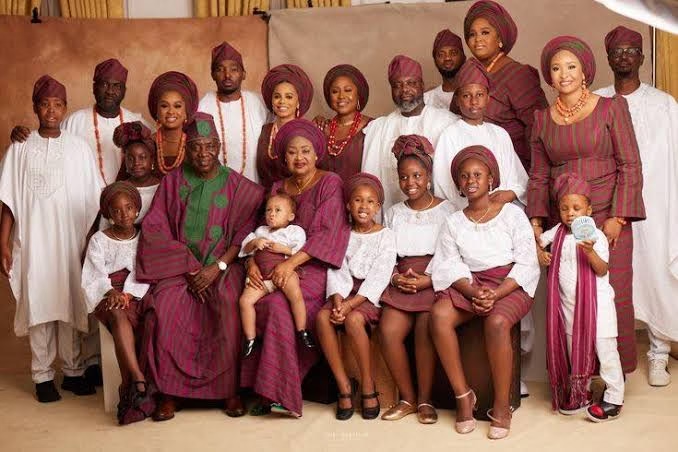
A family oríkì may mention ancestors, their qualities, achievements or important events connected to the family. For older generations, these details could be passed down naturally. A child hears the oríkì from a parent or grandparent, asks questions about a particular line and learns the story behind it. That is how a family can keep its history alive without necessarily having it written in a book.
The words themselves may be poetic, and some may be difficult to understand without knowing the family history behind them. But to those who know the story, an oríkì can say a great deal in very little time. There is also a strong connection between oríkì and ancestral memory.
When the name of an ancestor is mentioned during a praise performance, that person is brought back into the conversation. Their achievements and qualities become part of the moment again.
For younger members of a family, it can be a way of meeting people they never had the chance to know. The same applies to communities. Town oríkì can contain references to origins, migration, settlement, notable people and important events. Research into the Idepe-Ikale people of southeastern Yorubaland, for example, has examined how praise poetry can contribute to understanding the history and origins of a community.
Oríkì is heard at some of the occasions that matter most in Yoruba life.
At weddings, the bride and groom may be praised through their family oríkì. At naming ceremonies, praise expressions can introduce a child to their family and community. During chieftaincy and royal ceremonies, the oríkì of a chief or ruler may recall their lineage, achievements and place within the community.
It is also part of Yoruba festivals and religious traditions. Some òrìṣà have their own praise poetry, describing their attributes, stories and relationships with people. The Oríkì Yeye Òṣun performed during the Osun-Osogbo festival is one example.
What Oríkì Teaches
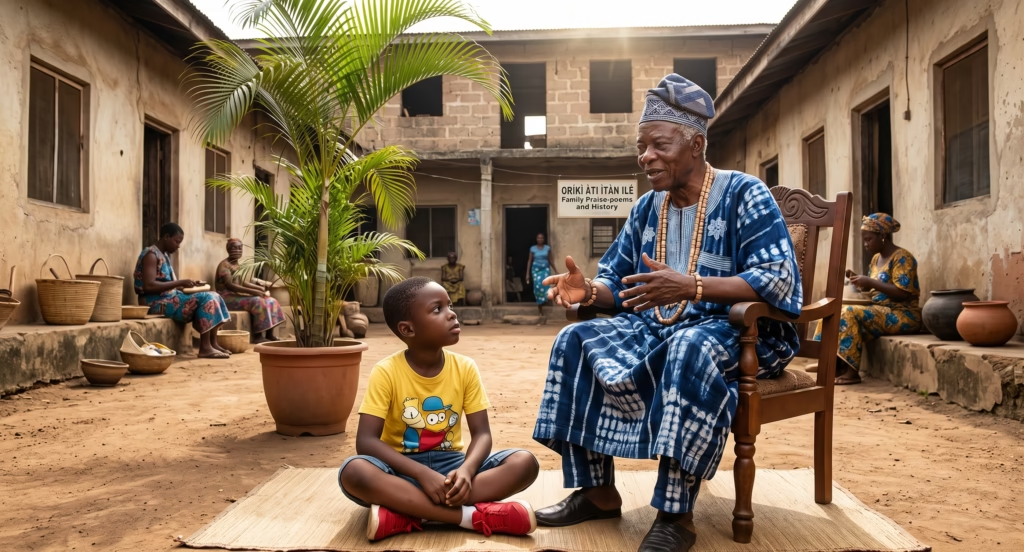
The things celebrated in an oríkì can also tell younger people what a family or community considers important. Bravery, generosity, wisdom, strength, hard work and leadership may all appear in praise poetry.
A child listening to an elder recite the family oríkì may therefore learn two things at once: where the family came from and the qualities associated with it. The lesson is woven into the praise.
Oríkì is not restricted to the way it was performed generations ago.
It is still heard at weddings, birthdays, naming ceremonies, funerals, festivals and chieftaincy events. But today’s performers also work with microphones, speakers, recorded music and other forms of technology. Elements of traditional praise performance have also found their way into contemporary Nigerian entertainment.
That ability to adapt has helped keep it relevant. However, the bigger concern is whether younger people will continue to understand it.
Keeping the Meaning Alive
Urbanisation, migration and the reduced use of Yoruba in some homes can make it harder for young people to learn long family praise poems. And there is a difference between knowing the words and knowing what they mean.
An old expression may make little sense to someone who does not know the Yoruba language, the family history or the story behind it. There is therefore a risk that oríkì could survive as performance while some of the knowledge within it gradually disappears.

Technology can help. Families can record grandparents and parents reciting their oríkì, explain the stories behind the words and keep those recordings for younger generations. Schools, cultural organisations and families can do the same.
For Yoruba people living outside Nigeria, these efforts can be especially important. Oríkì can provide a connection to family and ancestral communities even when distance makes regular contact with those places difficult.
A Tradition Still Being Spoken
Oríkì has lasted because people have continued to use it. It can be heard at celebrations, in family gatherings, at cultural events and in performances. Its form may change, but its connection to identity remains.
A person may not remember every detail of their family’s history, but an oríkì can be the place where some of those details are still waiting to be heard.
And sometimes, all it takes is an elder beginning to recite those familiar words for a family story to come alive again.