
There was a time when plastic was not a dominant part of everyday life.
This was not necessarily because people were more environmentally conscious. Plastic simply had not become as widespread as it is today.
For much of human history, bottles, containers and household items were made from materials such as glass, metal, wood, paper and cloth. Many of these items could be repaired, refilled, reused or returned instead of being discarded after a single use.
The widespread adoption of plastic changed that pattern.
Plastic was lightweight, relatively inexpensive, durable, waterproof and highly versatile. These properties made it useful across industries ranging from food packaging and healthcare to transportation, construction and consumer goods.
As production expanded, plastic became increasingly integrated into everyday consumption.
A bottle could be used for minutes before being discarded. A food wrapper could be removed almost immediately after purchase. A shopping bag might serve its purpose for a short period before becoming waste.
The convenience of plastic therefore became closely connected to a growing culture of disposability.
This is a major part of the modern plastic-waste challenge.
The problem is not simply that plastic exists. Its durability is one of the reasons it has been so useful. The challenge arises when materials designed to last are used for products that have extremely short useful lives and are then poorly managed after disposal.
Unlike many organic materials, conventional plastics generally do not readily decompose. Larger pieces can fragment into smaller particles and move through streets, drainage systems, soils and waterways.
As plastic production and consumption have increased, so has the volume of plastic waste requiring collection, recovery, recycling or disposal.
This has placed additional pressure on waste-management systems, particularly in communities where collection and recycling infrastructure has not expanded at the same pace as consumption.
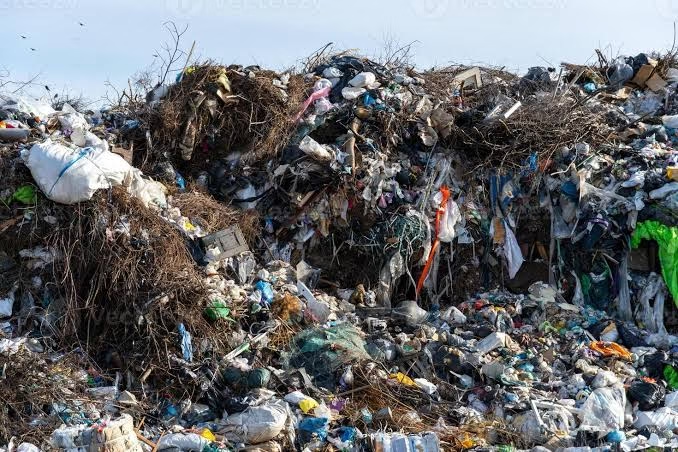
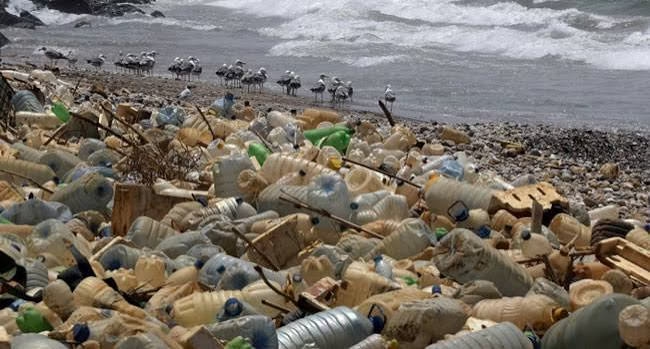
The result is visible in littered streets, blocked drainage channels, polluted waterways and the accumulation of plastic waste in terrestrial and marine environments.
Understanding the problem therefore requires looking beyond individual acts of littering.
Consumer behaviour is part of the picture, but so are production systems, packaging choices, waste-management infrastructure, recycling capacity and policies governing how plastic is produced and managed.
Changing the situation will require changes across that entire system.
Reducing unnecessary single-use plastics, designing products and packaging for reuse or recovery, improving waste collection and expanding recycling can all form part of the response.
Plastic transformed modern life because of its usefulness and versatility. The environmental challenge now is to manage that material in ways that preserve its benefits while reducing the amount that becomes pollution.
The question is therefore not only where plastic waste goes after it is discarded.
It is also why so much plastic is produced for products designed to be used briefly in the first place.
Understanding that shift is an important part of understanding the environmental challenge facing communities today.