
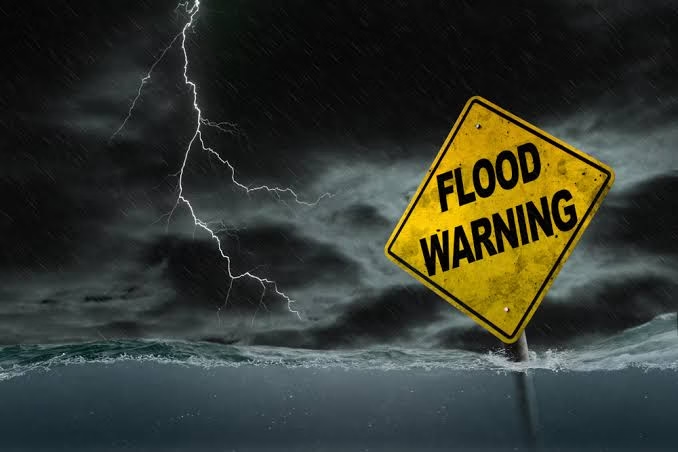
Knowing that a flood may occur is not the same as being prepared for one.
Each year, flood forecasts identify areas that may face increased risk. Weather information is released, warnings are issued and communities are encouraged to prepare. Nigeria’s Annual Flood Outlook provides risk assessments and predictions intended to support disaster preparedness and planning.
But a warning by itself cannot protect a community.
It cannot clear a blocked drainage channel, move a family to safety, prepare an evacuation route or protect a farmer’s livelihood. Its value depends largely on what happens after the information reaches the people and institutions that need to act.
This makes the period before a flood particularly important.
Flood preparedness can involve monitoring weather and water-level information, maintaining drainage infrastructure, identifying evacuation routes, protecting essential property and livelihoods, and ensuring that communities know what actions to take when warnings are issued.
Nigeria’s hydrological authorities have continued to develop flood forecasting and early-warning systems designed to provide information to communities and relevant authorities before flood events occur. NIHSA says its forecasting process uses rainfall and river-level data, hydrological models and monitoring systems to generate forecasts and disseminate warnings.
However, preparedness is not only a technical process.
Local knowledge can also be important. Residents of flood-prone communities may know which roads become inaccessible first, where water usually enters homes, which drainage channels overflow and which households may require assistance during an emergency.
Combining this local knowledge with scientific forecasting can help communities understand what a warning means in practical terms.
Preparedness also requires coordination. Government agencies, emergency-management authorities, local communities, businesses and households each have different responsibilities before, during and after a flood.
For residents, this may include paying attention to official warnings and knowing where to seek safety. For authorities, it can involve maintaining drainage systems, communicating risks clearly, preparing emergency responses and identifying vulnerable areas and populations.
Flooding cannot always be prevented. Heavy rainfall, river overflow and other natural processes can create hazards even where mitigation measures are in place.
But the consequences of a hazard can be influenced by the level of preparedness before it occurs.
This is why early warning should not be viewed simply as information to be received. It is information intended to support decisions and action.
A forecast can indicate where risk may increase. Preparedness determines what happens with that information.
For communities facing flood risk, the most important period may therefore begin before the first water enters the street.
The question is not only whether a flood warning has been issued.
It is whether the warning has been understood, communicated and turned into practical action.