
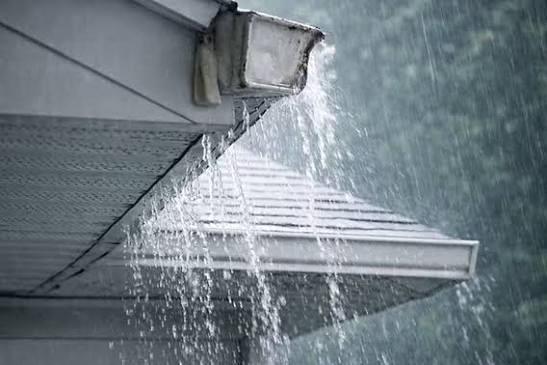
When rainfall begins, some residents may see flowing water in gutters and drainage channels as an opportunity to dispose of waste. Plastic bottles, sachet water packaging, food wrappers and other litter can be swept away by the rain, seemingly removing the waste from the immediate environment.
But the waste has not disappeared.
Instead, rainfall can transport improperly discarded materials through drainage systems into streams, rivers, wetlands and other waterways.
This movement of waste creates several environmental problems. Plastic and other debris can accumulate in drainage channels, restricting the flow of water and increasing the risk of flooding during heavy rainfall. Waste carried into waterways can also contribute to water pollution and introduce materials that can persist in aquatic ecosystems.
The consequences can extend to wildlife. Animals living in or around polluted waterways may encounter discarded plastics and other waste as they search for food or move through their habitats. Some may ingest plastic materials, while others can become trapped or injured by discarded objects.
The movement of waste from streets into waterways also demonstrates how environmental problems can extend beyond the location where waste is initially discarded. A plastic bottle pushed into a gutter in an urban neighbourhood can eventually become part of a much wider pollution problem.
For communities, preventing this process begins with proper waste disposal. Waste collection systems provide an important alternative to disposing of rubbish in gutters, drainage channels and waterways. Regular clearing of drainage systems can also help reduce the accumulation of debris, particularly ahead of periods of heavy rainfall.
However, effective waste management requires cooperation between residents, businesses, waste-management authorities and other stakeholders. Public awareness can also help people understand that disposing of waste in a drainage channel does not eliminate the problem; it simply moves it elsewhere.
As cities experience periods of increasingly intense rainfall and face growing waste-management pressures, preventing waste from entering drainage systems is an important part of reducing environmental risks.
Rainwater is part of the natural water cycle. It is not a waste-disposal system.
What leaves a street through a gutter can eventually reach an ecosystem, community or waterway far beyond where it began.