

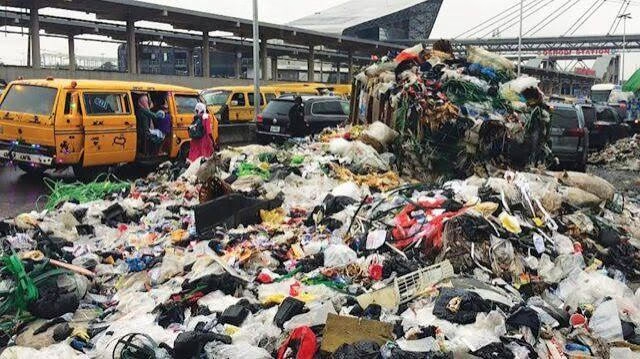
Many Nigerians take pride in keeping their homes clean and maintaining their private surroundings. Yet, the condition of streets, markets, drainage channels and other shared spaces can often present a different picture.
The contrast raises a broader environmental question: why do public spaces become dirty so quickly?
While inadequate waste-management systems contribute to the problem, environmental cleanliness is also influenced by individual behaviour and how people perceive shared spaces. When public areas are regarded as someone else’s responsibility, littering and improper waste disposal can become normalized.
Plastic bottles, food packaging, nylon bags and other forms of waste can accumulate in streets and drainage channels. Beyond affecting the appearance of communities, this waste can obstruct drainage systems, contribute to flooding and create conditions that may pose public health concerns.
Poorly maintained public spaces can also affect the quality of urban life. Accumulated waste can produce unpleasant surroundings, reduce the usability of communal areas and contribute to environmental degradation.
Addressing the problem therefore requires more than simply increasing waste collection. Effective waste-management systems are important, but their impact can be strengthened when residents also take responsibility for how waste is disposed of.
Building cleaner communities requires a shared approach involving citizens, local authorities, waste-management operators, businesses and community organisations. Public education and consistent enforcement can also help encourage responsible environmental practices.
The challenge is ultimately not only about where waste goes after it is collected. It is also about how people interact with the spaces they share.
Treating public spaces with the same level of care given to private surroundings can contribute to cleaner streets, more functional drainage systems and healthier urban environments.
Creating sustainable communities therefore depends on both effective environmental systems and a culture of collective responsibility.