
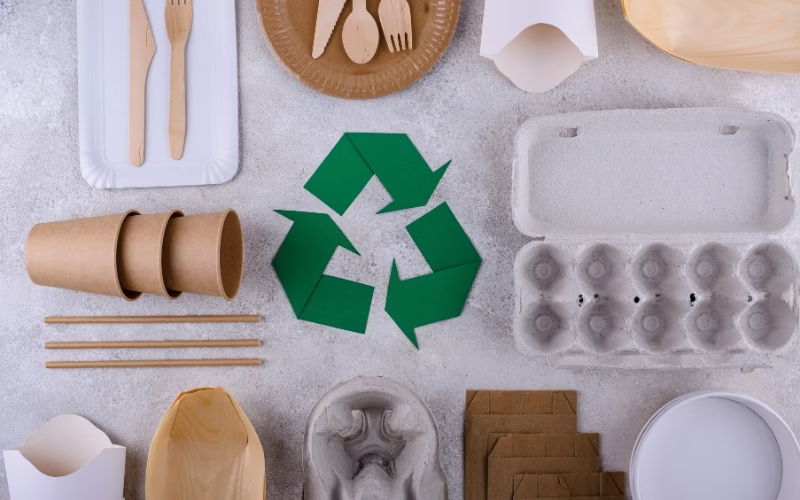
Bamboo, wood, cotton, clay and natural fibres have served human needs for generations. Today, however, many everyday products are made from plastic materials that can remain in the environment for decades or longer, even when they are used for only a few minutes.
Plastic was not developed without purpose. It solved important problems by making products lighter, cheaper, more durable and easier to transport. It transformed industries such as medicine, manufacturing, food preservation and packaging.
However, the widespread use of plastic, particularly in single-use products, has created a growing environmental challenge. Materials designed to last are frequently used for short periods before being discarded.
This raises an important question: are we using the right materials for the right purposes?
How Plastic Became a Dominant Material
Plastic became widely used because of its versatility and practical advantages. It can be moulded into different shapes, is relatively lightweight, resists moisture and can be produced at large scale.
These properties have made it valuable in healthcare, construction, transportation, electronics and food packaging.
In many situations, plastic has also helped improve product safety and reduce transportation costs. Its use in medical equipment, for example, has supported hygiene and infection prevention.
The challenge is not that plastic exists or that every plastic product is unnecessary. It is that the convenience of disposable plastic has encouraged patterns of consumption in which products are used briefly and discarded without adequate systems for recovery or reuse.
A material capable of remaining in the environment for a long time may be used to package a product consumed within minutes.
What Are the Sustainable Alternatives to Plastic?
Materials such as bamboo, paper, glass, wood, cotton, clay and natural fibres are often considered alternatives to plastic. Depending on the product and its intended use, they may offer opportunities to reduce reliance on single-use plastics.
However, choosing an alternative requires more than comparing the materials themselves. Their environmental impact depends on how they are sourced, manufactured, transported, used and disposed of.
Bamboo and Wood
Bamboo and wood can be used to manufacture reusable household items, furniture, utensils and packaging.
Bamboo is particularly useful in some applications because it grows relatively quickly and can regenerate after harvesting. However, responsible sourcing and appropriate processing remain important considerations.
Cotton and Natural Fibres
Cotton, jute and other natural fibres can be used in shopping bags, clothing, packaging and household products.
Reusable fabric bags, for example, can reduce the need for disposable carrier bags when used repeatedly. However, growing, processing and transporting natural fibres also require resources, including water and energy.
Glass
Glass is widely used in food and beverage packaging. It can be reused and recycled, making it suitable for certain applications.
However, glass is heavier than plastic, which can increase transportation-related emissions. Its production also requires substantial energy because of the high temperatures involved in manufacturing.
Paper and Cardboard
Paper-based materials are used in packaging, shopping bags, containers and other disposable products.
They can be recyclable and, under suitable conditions, biodegradable. Nevertheless, their environmental performance depends on responsible forestry, production methods, water and energy use, and the availability of effective recycling or disposal systems.
These examples demonstrate that no material is automatically sustainable simply because it comes from a natural source.
Why Replacing Plastic With Another Material Is Not Always the Answer
The conversation about plastic pollution sometimes focuses on replacing plastic with alternatives such as paper, glass or bamboo. While these materials can be useful, replacing one material with another without considering its full environmental impact may simply shift the problem.
Every material has a life cycle.
Its production may require land, water, energy and raw materials. Transportation contributes to environmental emissions, while poor disposal can create additional waste.
For example, a reusable product may offer environmental benefits only when it is used enough times to justify the resources required to manufacture it.
This is why material choices should be assessed according to their intended purpose, expected lifespan, environmental footprint and available end-of-life management systems.
The goal should not be to replace every plastic product indiscriminately, but to choose materials that perform their intended functions with the least overall environmental impact.
Moving Beyond Single-Use Consumption
One of the most effective ways to reduce plastic waste is to question whether certain products need to be disposable in the first place.
Reusable containers, refill systems, durable shopping bags and repairable household products can reduce the demand for items designed for a single use.
Businesses can also examine their packaging choices and eliminate unnecessary materials where possible.
Product designers and manufacturers have an important role in developing items that last longer, can be repaired and are easier to reuse or recover.
These changes require a shift from a consumption pattern based on convenience and disposal towards one that considers durability, resource efficiency and waste prevention.
Why Sustainable Material Choices Matter for Nigeria
For Nigeria, decisions about materials are not only environmental choices. They also have economic and social implications.
The materials used by manufacturers influence production costs, employment, local industries, transportation, resource consumption and the demands placed on waste management systems.
Locally available materials such as bamboo, wood and natural fibres may offer opportunities for innovation and economic activity when they are sourced and processed responsibly.
However, developing sustainable alternatives also requires investment in research, manufacturing capacity, quality standards, market access and appropriate infrastructure.
Businesses must be able to produce alternatives that are affordable, functional and accessible to consumers. At the same time, environmental considerations must guide how natural resources are harvested and managed to avoid creating new ecological pressures.
A sustainable transition must therefore consider both environmental protection and economic realities.
Rethinking the Materials We Use
Reducing plastic pollution requires more than finding another material to replace it. It requires examining why products are made from particular materials, how long they remain useful and what happens when they are no longer needed.
Some products may benefit from reusable alternatives. Others may require improved packaging design, reduced material use or better recycling systems. In certain applications, plastic may remain the most suitable option, provided it is used responsibly and managed appropriately after consumption.
The important questions are whether a material is necessary, whether it can be used for longer, whether it can be recovered and whether its environmental costs are justified by its benefits.
Sustainability is not simply about replacing plastic. It is about making better decisions about the materials we produce, consume and discard.
Nature provides a wide range of resources, but using them responsibly requires understanding their limits and considering the full life cycle of everything we make.