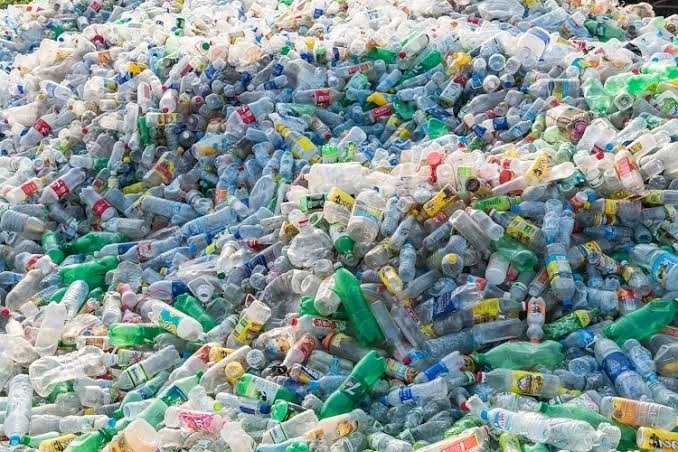

In many homes, offices, schools and public spaces, different types of waste are often placed in the same bin. Food scraps, plastic bottles, paper, cans and other discarded materials can end up mixed together before they reach a collection point.
However, not all waste is the same, and mixing different materials can make effective waste management more difficult.
When recyclable materials come into contact with food waste or other contaminants, their recovery can become more challenging. Materials that could otherwise be recycled or organic waste that could potentially be composted may instead end up being treated as general waste.
This is where waste separation at source becomes important.
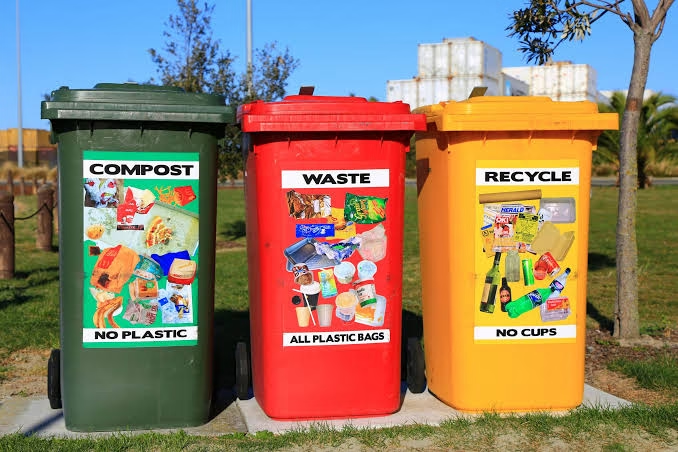
Separating waste at the point where it is generated allows different materials to be handled according to their characteristics. Organic waste, such as food scraps, can be separated from recyclable materials including plastic bottles, paper, cardboard and cans. Other materials that cannot easily be recovered can then be placed in a separate general-waste stream.
The exact number and colour of bins used for waste separation can vary depending on the system adopted by a community, institution or waste-management authority. What matters is that different categories of waste are identified and kept separate where practical.
Source separation can support recycling by making recyclable materials easier to collect and process. It can also reduce the volume of waste requiring disposal and help prevent potentially useful materials from being lost in mixed waste.
The approach also requires supporting infrastructure. Separating waste at home or in an office is less effective if the different waste streams are subsequently mixed during collection or transportation. Effective waste management therefore depends on coordination between households, institutions, waste collectors, recycling operators and government authorities.
Public awareness is another important part of the process. People need to understand what belongs in each waste category and have access to appropriate collection systems.
Waste management does not begin at the dumpsite. It begins at the point where waste is generated.
The decision to separate a food scrap from a plastic bottle or a recyclable container from general waste may seem small, but consistent separation at source can contribute to more efficient waste recovery and better environmental management.
Not all waste belongs in the same bin, and recognising that difference is an important first step toward managing waste more responsibly.