
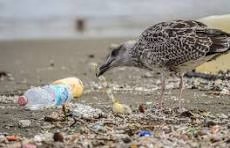
For a seabird searching for food across the ocean, a floating piece of plastic can sometimes resemble prey or other edible material. When ingested, however, that plastic can have serious consequences for the animal.
Plastic ingestion is a documented threat to seabirds. Research has shown that swallowed plastic can cause physical injuries, blockages in the digestive system and reduce the amount of actual food an animal is able to consume. In severe cases, plastic ingestion can contribute to malnutrition, starvation and death.
The problem begins far beyond the ocean.
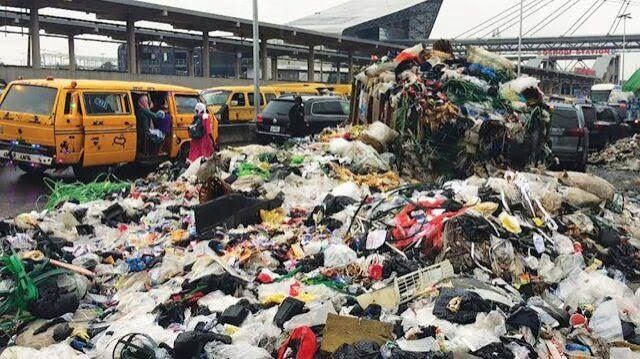
A plastic bottle discarded on a street, a food wrapper left on a beach, a plastic bag carried into a drainage channel or fishing equipment abandoned in the water can eventually find its way into aquatic environments.
Once there, discarded plastic can become part of the habitat of marine and coastal wildlife. Birds may mistake pieces of plastic for food, while other animals can become entangled in fishing lines, bags and other discarded materials.
The scale of plastic pollution also means that the threat is not limited to large pieces of visible waste. Researchers have detected microplastics in seabirds, while scientists continue to investigate the potential effects of these particles on wildlife and ecosystems.
For humans, a discarded plastic item may appear to be an ordinary piece of litter. In an ecosystem, however, the same object can become a source of injury or a threat to an animal that encounters it.
This highlights an important aspect of plastic pollution: its effects extend beyond the places where waste is discarded. Plastics can move through drainage systems, rivers and coastal waters, connecting everyday waste-disposal practices with ecosystems far from where the waste originated.
Reducing the threat requires action at several levels, including better waste-management systems, responsible disposal, reduction of unnecessary single-use plastics and greater protection of marine and coastal environments.
Wildlife has no control over the waste introduced into its habitat. Yet birds, fish and other animals can be among those affected by the consequences.
Plastic pollution is therefore not only a question of keeping streets and beaches clean. It is also about protecting the ecosystems and species that depend on those environments.
What appears to be ordinary waste to humans can become a serious hazard to wildlife.