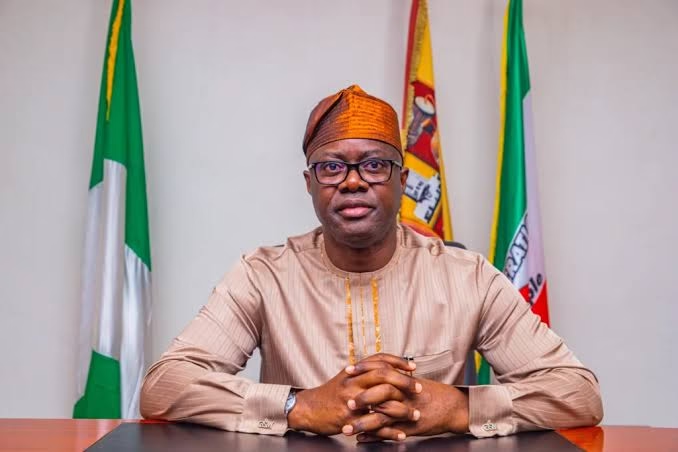


A political storm has erupted in Oyo State as former Ekiti State Governor Ayodele Fayose and Oyo State Governor Seyi Makinde exchange sharp allegations over the handling of federal intervention funds following the January 16, 2024 Bodija explosion, a tragedy that rocked Adeyi Avenue area of Bodija, Ibadan, leaving lives lost and properties destroyed.
At the center of the dispute is a disagreement over whether the Federal Government released ₦50 billion to Oyo State as support for recovery and rehabilitation efforts and if so, whether that money was transparently accounted for.
What Fayose Claims
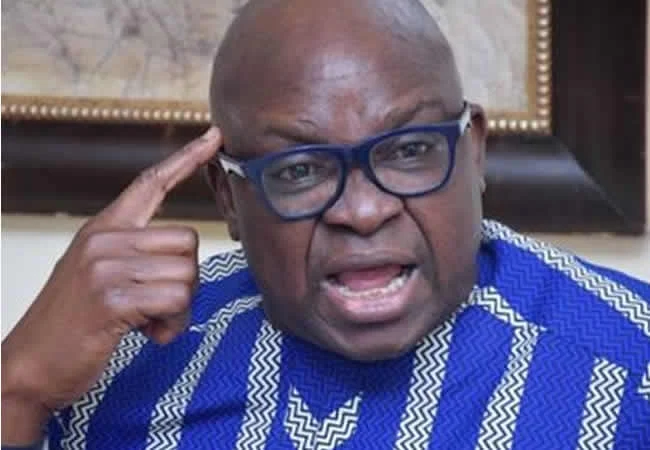
On national television and through social media, Fayose has alleged that Governor Makinde received ₦50 billion from the Federal Government after the Bodija explosion but only a fraction of it, roughly ₦4.5 billion, was disbursed to victims, while the rest was allegedly diverted elsewhere.
To support his assertion, Fayose released what he described as documentary evidence, including a letter from the Office of the Accountant-General of the Federation to the Minister of Finance, which he claims shows Oyo State on a list of beneficiaries of the ₦50 billion intervention.
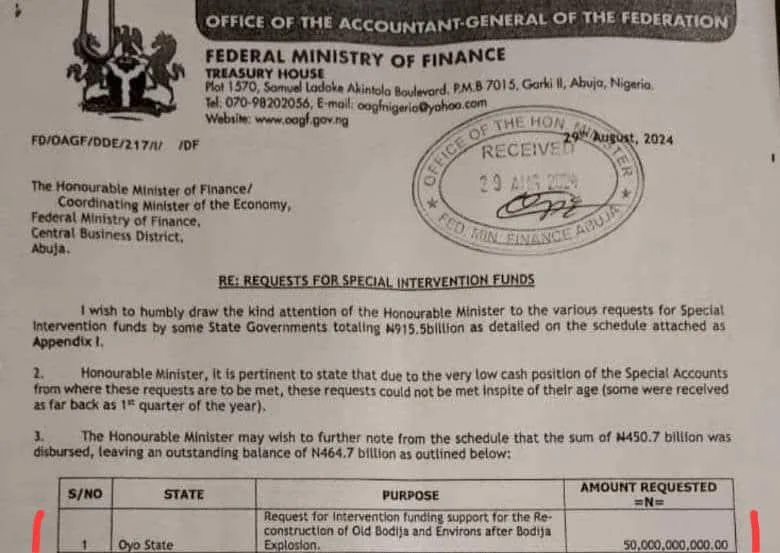
Fayose has further linked the controversy to internal strife within the Peoples Democratic Party (PDP), suggesting that divergent political ambitions, including Makinde’s stated position on national politics have compounded tensions.
In his own words, Fayose insists: “My name is still Ayo Fayose; I don’t say what I can’t prove.”
Makinde’s Rebuttal: Promise vs. Disbursement

Makinde’s government has firmly denied that a ₦50 billion disbursement ever took place. According to the Special Adviser on Media to the Governor, Dr. Sulaimon Olanrewaju, what exists on record is a request and a presidential promise for ₦50 billion, but only ₦30 billion was actually released, and not the full amount alleged by Fayose.
Olanrewaju described Fayose’s claims as “misleading and deliberately disingenuous”, noting that Fayose has been unable to provide evidence of a disbursement.
The governor’s office further clarified that:The ₦30 billion that was released was used for relief and reconstruction activities, including direct support to victims and rebuilding damaged infrastructure. The often-quoted ₦4.5 billion figure refers to direct supports to victims, roughly 15 % of the funds released. Plans have been discussed to erect a memorial at the explosion site, and ongoing reconstruction continues under government oversight.
Governors’ aides also argued the controversy may be politically motivated, pointing to Makinde’s recent stance on national elections and his refusal to back President Bola Tinubu’s 2027 re-election bid as possible triggers for renewed attacks. This controversy has highlighted deeper fissures within the PDP in the South-West.
Local PDP groups have publicly rebuked Fayose, describing his claim as baseless and misleading, and even challenging him to produce documents showing actual approval of the claimed ₦50 billion rather than just a request letter. The fallout shows ongoing disagreements over party leadership, loyalty and political strategy, particularly as the 2027 general elections draw closer.
Transparency, Accountability and Public Trust
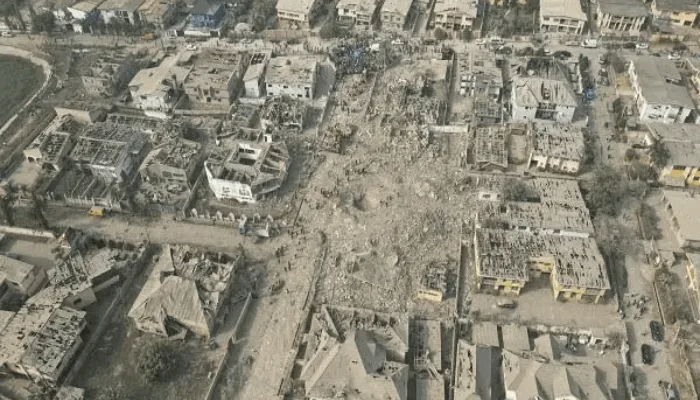
The Bodija explosion controversy taps into a broader governance issue facing Nigeria: how public funds, epecially those meant for emergency response are tracked, reported and communicated to citizens.
Observers note that Government promises must be accompanied by clear, publicly accessible disbursement records. Vague terms like “promise” versus actual cash transfers can fuel speculation and political exploitation and opposition voices will inevitably challenge narratives when official transparency is perceived as Insufficient.
For many Nigerians seeking accountability, the crux of the matter remains straightforward: Was the intervention fully disbursed? If so, where did the money go? If not, why? The answers should be backed by verifiable records from both federal and state financial disclosures.
The Fayose–Makinde feud is a case study in political narrative, public accountability, and the complexities of governance in Nigeria’s federal system. As the parties continue to defend their versions of events, the broader public, victims of the Adeyi, Bodija tragedy included waits for clarity.
For now, the controversy reveals one timeless fact of Nigerian politics, which is facts matter, and so does proof.