
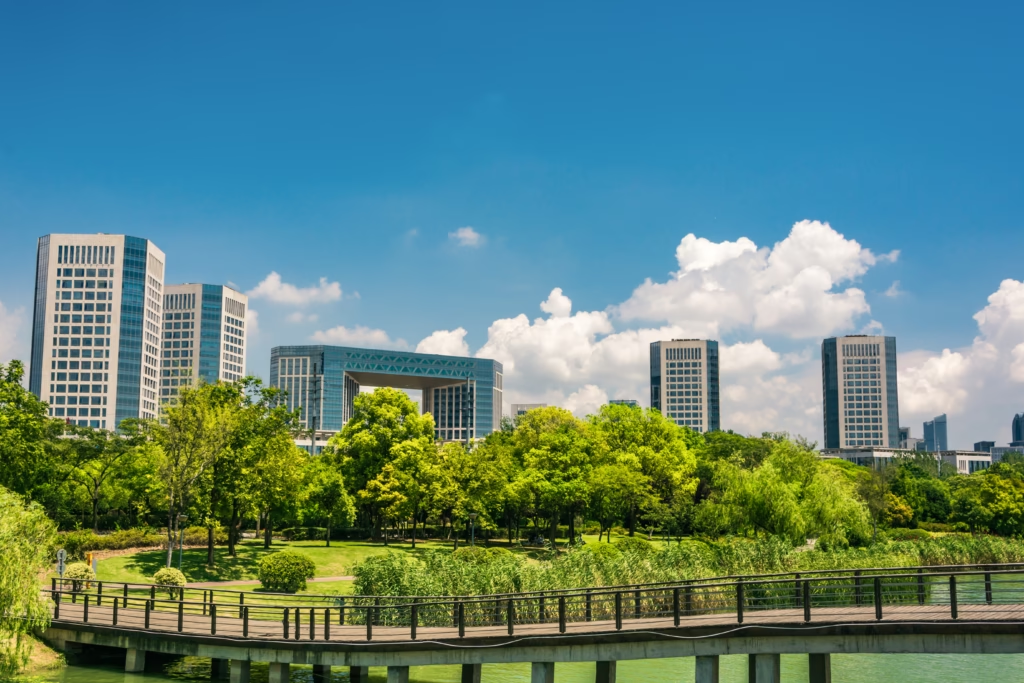
As cities expand, trees are often removed to make room for roads, residential buildings, commercial centres and other infrastructure. Open spaces are converted into construction sites, while natural vegetation gradually gives way to concrete, asphalt and other heat-absorbing surfaces.
These changes are frequently associated with urban development. However, they can also remove some of the natural features that help regulate temperatures within cities.
Trees and green spaces do more than improve the appearance of neighbourhoods. They provide shade, cool the surrounding air and contribute to more comfortable urban environments. When they disappear without adequate replacement, the consequences can be felt by the people who live and work in those areas.
The growing loss of urban vegetation raises an important question: how can cities accommodate development without sacrificing the natural features that make them more liveable?
How Concrete and Asphalt Contribute to Urban Heat
Urban areas often experience higher temperatures than surrounding rural areas, partly because of a phenomenon known as the urban heat island effect.
This occurs when buildings, roads, pavements and other artificial surfaces absorb and retain heat from the sun. Materials such as concrete and asphalt can store heat during the day and release it gradually, including into the evening.
The problem becomes more pronounced when vegetation is limited. Trees provide shade that reduces direct sunlight reaching roads, buildings and other surfaces. Through a process called evapotranspiration, they also release water vapour into the atmosphere, helping to cool their surroundings.
When trees are removed and replaced with heat-absorbing materials, these cooling benefits are reduced. The resulting environment can become significantly less comfortable, particularly during periods of intense heat.
Building density, limited airflow, traffic and waste heat from vehicles and air-conditioning systems can further influence urban temperatures.
The Human Cost of Disappearing Green Spaces
Urban heat is not simply an issue of discomfort. Prolonged exposure to high temperatures can create health risks, particularly for people who spend long periods outdoors or have limited access to cooling.
Street traders, construction workers, transport operators, delivery workers and other outdoor workers may be exposed to intense heat throughout the day. Children, older people and individuals with certain health conditions can also be more vulnerable to heat-related illnesses.
For households, rising temperatures may increase dependence on fans and air-conditioning systems, potentially adding to electricity consumption and household expenses.
The effects can also influence productivity. People working in excessively hot environments may experience fatigue, dehydration and reduced concentration, while outdoor commercial activities can become more difficult during periods of extreme heat.
These challenges are particularly important in communities where access to reliable electricity, affordable cooling and adequate public green spaces is limited.
Why Trees Matter in Urban Planning
Urban trees and green spaces are important components of climate-responsive city planning. Their benefits extend beyond temperature regulation.
Trees can improve the quality of urban environments by absorbing certain air pollutants, providing habitats for birds and other wildlife, reducing surface water runoff and contributing to the overall well-being of residents.
Parks, gardens, roadside vegetation and other green spaces also provide places for recreation, relaxation and social interaction. They can make densely populated neighbourhoods more attractive and improve residents’ access to outdoor spaces.
However, the benefits depend on the location, size, condition and type of vegetation. A few decorative plants cannot necessarily replace the cooling and ecological functions of mature trees or larger green spaces.
This makes the protection of existing vegetation particularly important. Once mature trees are removed, replacing their environmental benefits may take many years.
Building Cities Without Eliminating Nature
Urban growth does not have to come at the expense of green spaces. With appropriate planning, infrastructure development and environmental conservation can be pursued together.
City authorities can protect existing trees, establish green belts and incorporate parks and community gardens into urban development plans. Roadside planting and the integration of vegetation into residential and commercial developments can also help improve local conditions.
Where trees must be removed for essential construction, replacement planting should be carefully planned. This involves selecting suitable tree species, considering their long-term growth requirements and ensuring that they receive adequate maintenance.
Urban planners and developers should also consider building designs, roofing materials, ventilation and surface choices that reduce heat absorption.
Importantly, green spaces should not be concentrated only in affluent neighbourhoods. Low-income communities, informal settlements and densely populated areas also need access to shade and vegetation.
The Future of Urban Living Depends on What We Preserve
Cities need roads, homes, businesses and infrastructure to support growing populations. But the quality of urban development should not be judged by construction alone.
A city filled with buildings but lacking adequate trees, parks and open spaces may provide infrastructure while overlooking important conditions for human comfort and well-being.
Protecting urban vegetation is therefore not simply an aesthetic decision. It is an investment in public health, environmental quality and the long-term liveability of cities.
As urban areas continue to expand, the challenge is to build places that accommodate human needs while preserving the natural systems that make those places comfortable to inhabit.
Development should give cities room to grow, but it should also leave room for nature.


