
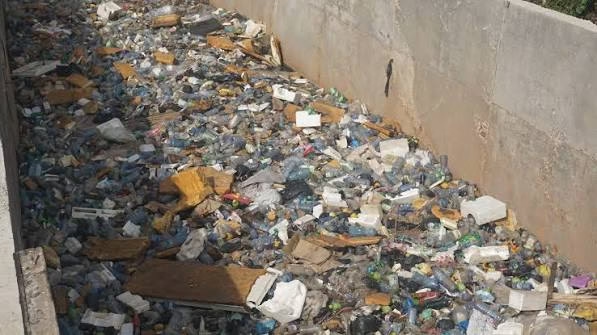
We use the phrase “throw it away” so casually that it is easy to forget that there is no place where waste simply disappears.
A plastic bottle, food wrapper, discarded piece of clothing or broken electronic device may leave someone’s hands in seconds. What happens to it afterwards depends largely on how waste is collected, managed and processed.
Some waste is collected and taken to disposal facilities. Materials such as plastics, paper, metals and other recyclables can be recovered and processed for reuse. Organic waste can also be treated through methods such as composting where appropriate.
But not all waste enters these systems.
Poorly managed waste can be dumped illegally, burned in the open or left in streets and public spaces. Some waste can also be carried by wind or rain into drainage channels, rivers and other waterways.
Where waste ends up can determine the environmental consequences that follow.
Waste that enters drainage systems can contribute to blockages and increase flooding risks. Plastics that reach rivers and oceans can persist in aquatic environments and threaten wildlife. Open burning can release pollutants into the atmosphere, while poorly managed waste disposal can contribute to soil and water contamination.
At the same time, materials that could potentially be recovered may be lost when different forms of waste are mixed together or disposed of without adequate sorting and collection systems.
This is why waste management is not simply about removing rubbish from where people live. It involves a chain of activities that includes waste generation, collection, transportation, sorting, recovery, treatment and final disposal.
Individuals have a role within that chain, but responsibility does not end with consumers. Waste-management authorities, businesses, manufacturers, recycling operators and policymakers all influence what happens to discarded materials.
Effective waste management therefore requires systems that make responsible disposal possible and accessible, alongside public awareness about how those systems work.
The idea of “throwing something away” can make waste seem like a problem that ends once an item leaves our hands. In reality, every discarded item has a destination.
It may become a recovered material, enter a landfill, be processed for another use or become pollution in the environment.
There is no magical place called “away.”
The more useful question is not simply where waste can be thrown, but where it should go so that its environmental impact can be reduced and, where possible, its useful materials recovered.


