
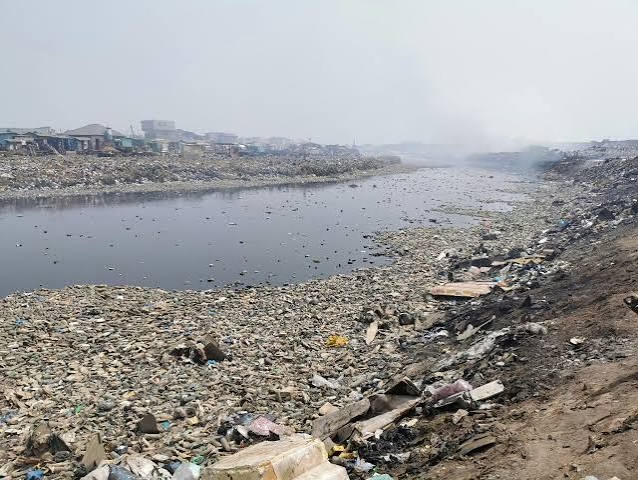
Pollution may begin in one location, but its effects do not necessarily remain there.
Water moves continuously through the environment. Rivers and streams flow into lakes, wetlands and oceans, while groundwater moves beneath the surface and water returns to the atmosphere through evaporation before falling again as precipitation.
This interconnected system supports ecosystems, agriculture, wildlife and human communities. It also means that pollution introduced into one part of the water environment can potentially affect areas far beyond its original source.
When waste is dumped into a river, untreated wastewater is discharged into a waterway or chemicals enter a drainage system, the consequences can extend downstream.
Rivers transport water, sediments and materials towards larger water bodies. Some pollutants can remain dissolved in the water, while others may attach to sediments and accumulate in particular environments. Pollutants can also affect aquatic organisms, creating potential consequences throughout food webs.
The movement of pollutants is not always straightforward. Their behaviour depends on factors such as the type of contaminant, water conditions, currents and the characteristics of the ecosystem. Some substances can persist for long periods, while others may break down or become diluted.
The underlying principle, however, remains clear: waterways are connected.
This makes water pollution more than a problem for the community where contamination begins. Activities upstream can affect people, wildlife and ecosystems downstream.
Agricultural runoff, poorly managed waste, industrial discharges, sewage and other sources of contamination can all place pressure on freshwater and marine environments. Preventing pollution at its source is therefore an important part of protecting water quality.
Communities can contribute by preventing waste from entering drainage systems and waterways, while businesses and industries have a responsibility to manage their waste and wastewater appropriately. Government agencies also play an important role through environmental monitoring, regulation, infrastructure and enforcement.
Protecting waterways is ultimately about protecting a shared environmental resource.
A river does not recognise the boundaries between one community and another. Water continues to move, carrying both the benefits of healthy ecosystems and, when polluted, the consequences of environmental mismanagement.
What happens upstream can therefore matter far beyond where it begins.
Protecting water requires action at every point along the system, from the streets and communities where pollution can originate to the rivers, wetlands and oceans that receive the water.


