
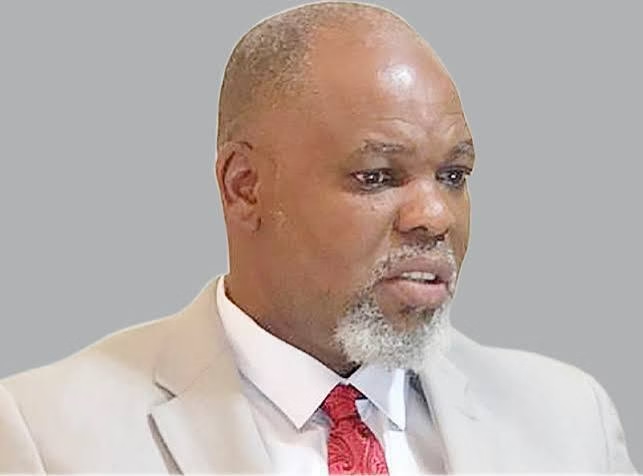
A water resources management expert, Michael Ale, has called on the Ekiti State Government to strengthen its laws and institutions to tackle the recurring flooding affecting communities across the state.
Ale, Coordinator of the Global Development Initiative, said the repeated flooding, particularly in Ado Ekiti, was worsened by weak enforcement of urban planning and environmental regulations.
He made the call in a statement issued in Ado Ekiti on Wednesday, following flooding recorded in parts of the state last week, which reportedly caused deaths, property damage and disruption to economic activities.
Ale urged the Ekiti State House of Assembly to enact a Flood Resilience and Urban Planning Enforcement Law to strengthen flood prevention and impose sanctions for violations.
He said many of the factors contributing to flooding were already known and predictable, including construction on waterways, blocked drainage channels, indiscriminate waste disposal and inadequate dredging ahead of the rainy season.
According to him, the recurring nature of the problem points to a lack of effective institutional mechanisms to enforce existing regulations and hold offenders accountable.
Ale also called for the creation of a dedicated waste management institution with powers to sanction indiscriminate dumping in drainage channels, as well as an emergency management institution equipped with an effective early warning system.
He noted that Ekiti’s 30-year Development Plan already identifies flood control, sustainable urbanisation and environmental resilience as priorities, but questioned the level of monitoring and implementation.
Among his recommendations, Ale proposed mandatory annual dredging of the Ureje and Elemi waterways before March, the establishment of 50-metre no-build buffer zones and criminal penalties for construction without drainage clearance.
He also urged the government to establish a committee of experts to develop a comprehensive, long-term solution to the state’s flooding problem.
Drawing lessons from Oyo State, Ale said Ekiti could seek support from international development partners, including the World Bank, to finance major flood-control interventions.
“Ekiti State can do the same. Let us ask for meaningful intervention,” he said.
The expert further advised residents to avoid walking or driving through floodwaters during heavy rainfall, warning of the risk of drowning and other hazards.
He urged residents to wait for floodwaters to recede before attempting to move through affected areas.


