
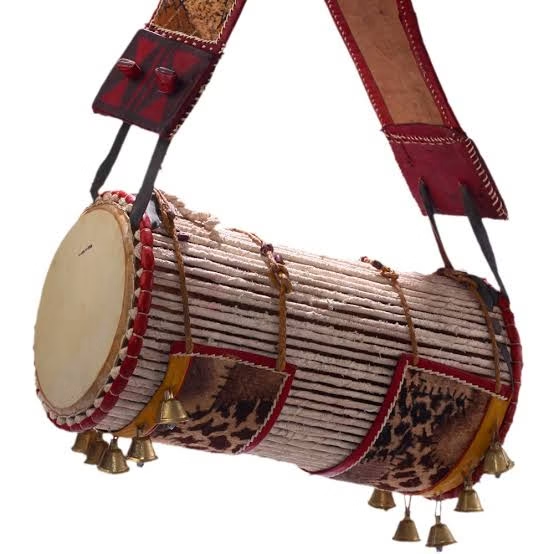
A Yoruba talking drum can call a name, praise a person, accompany a dancer and reproduce the rhythm of spoken words, all without the presence of a human voice.
For generations, skilled Yoruba drummers have used changes in pitch, rhythm and tension to make the drum echo aspects of speech. What sounds like ordinary drumming to an unfamiliar listener can carry meaning to someone who understands the language and the tradition behind it.
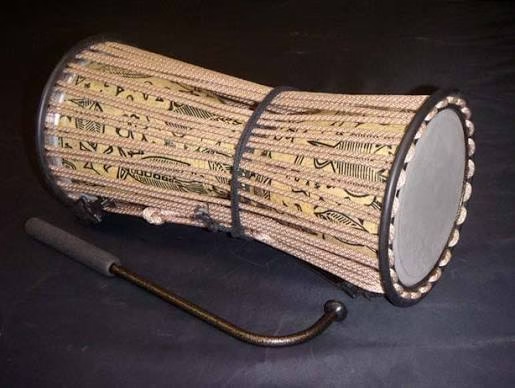
The dùndún, one of the best-known Yoruba talking drums, is particularly suited to this. Its hourglass-shaped body has two drumheads connected by tension cords. By squeezing the cords while striking the drum, the drummer changes the tension and, consequently, the pitch.
This is especially significant in Yoruba, a tonal language in which pitch can affect meaning. The drummer uses this relationship between pitch and language to create patterns that can resemble spoken expressions. But the talking drum has never been simply about entertainment.
A Drum With a History

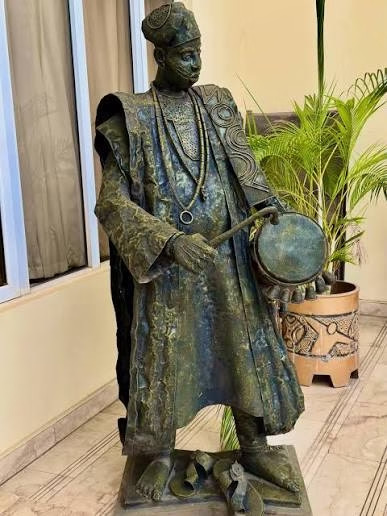
The exact origin of Yoruba talking drums is difficult to establish. There is no reliable historical record identifying a particular person as their inventor. Instead, their history is closely tied to Yoruba oral traditions, music, spirituality and the work of traditional drumming families.
One important figure in this tradition is Àyànàgalú, regarded by traditional Yoruba drummers as an ancestral figure associated with the profession of drumming. The name Àyàn is also associated with drumming and appears in the names of several traditional drummer families.
Drumming developed within a society where oral communication was central to preserving knowledge. Before written records became widespread, history, genealogies, proverbs, praise poetry, religious knowledge and stories were passed from one generation to another through speech, song and performance. The drummer was therefore part of a much larger system of cultural preservation.
More Than One Yoruba Drum
While the dùndún is widely recognised as a talking drum, Yoruba drumming is not limited to one type of instrument.

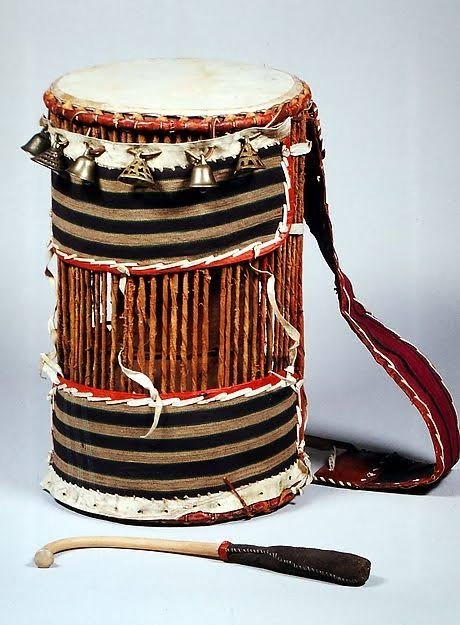
The bàtá, a double-headed drum, is another important Yoruba drum tradition. It has a particularly strong connection with traditional religious practices and has historically been associated with òrìṣà traditions, including those linked to Sàngó.
The two traditions should not be treated as identical. They have different structures, performance practices and cultural contexts, even though both demonstrate the important place of drumming in Yoruba society.

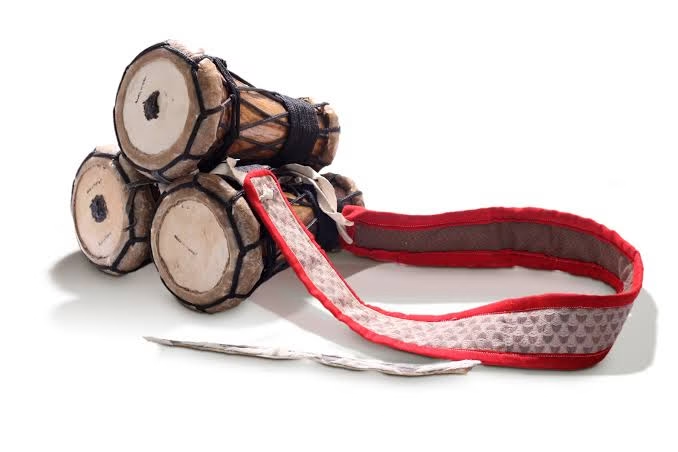
One of the most distinctive uses of the talking drum is its ability to accompany or reproduce elements of speech. A skilled drummer can use patterns of pitch and rhythm to echo names, expressions and oríkì: Yoruba praise poetry that may contain references to a person’s family, ancestry, character or achievements. This is why drumming has traditionally been closely connected with praise singers.
At royal courts and important social gatherings, drummers could celebrate rulers and prominent individuals while recalling their lineage and accomplishments. The performance was entertainment, but it could also reinforce identity, history and social status.
The Drum in Yoruba Ceremonies
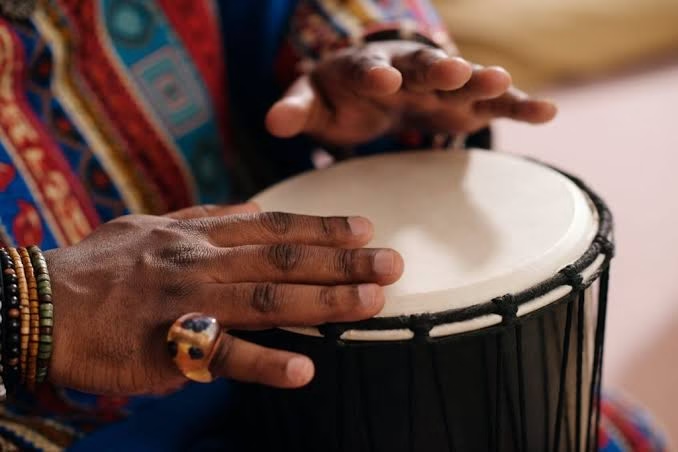
The talking drum has remained an important part of Yoruba celebrations and ceremonies. It can be heard at weddings, naming ceremonies, festivals, funerals and community events, accompanying singers and dancers while responding to the movement of performers.
The relationship between the drummer and dancer is particularly important. A drummer can change the rhythm to challenge, guide or respond to a dancer, creating an interaction that makes the performance feel almost like a conversation.
Drumming also has an important place in Yoruba religious ceremonies, where particular drums and rhythms may be associated with specific traditions, deities and rituals.
The talking drum did not remain confined to traditional settings. Today, Yoruba drums are heard at modern weddings and cultural events alongside DJs, microphones and contemporary music. Their sounds have also been incorporated into Nigerian popular music, allowing traditional percussion to reach new audiences.
Through migration and the African diaspora, Yoruba drumming traditions have also travelled beyond Nigeria. The bàtá, for instance, continues to have religious and cultural significance in communities in parts of the Caribbean and the United States.
Keeping the Sound Alive
The continued presence of talking drums does not mean the tradition faces no challenges. Becoming a skilled traditional drummer takes years of practice and requires more than learning how to strike an instrument. The performer must understand rhythms, language, praise traditions and the cultural situations in which different forms of drumming are appropriate.

As musical tastes change and traditional apprenticeship becomes less common in some communities, there is a growing need to pass this knowledge to younger generations.
Preserving the talking drum, therefore, is not simply about preserving an old musical instrument. It is about preserving a way of expressing language, remembering history, celebrating identity and connecting generations.
From royal courts and religious ceremonies to weddings, festivals and contemporary music, the Yoruba talking drum has continued to adapt without losing its distinctive voice. It is a drum, but for those who understand its language, it has always been much more than that.


